



Cutting and Preparation
Initially, steel plates, prepared as steel strips, are cut to the required size and shaped into shelves. These plates can be made from various types of steel, such as carbon steel or stainless steel.

Forming Process
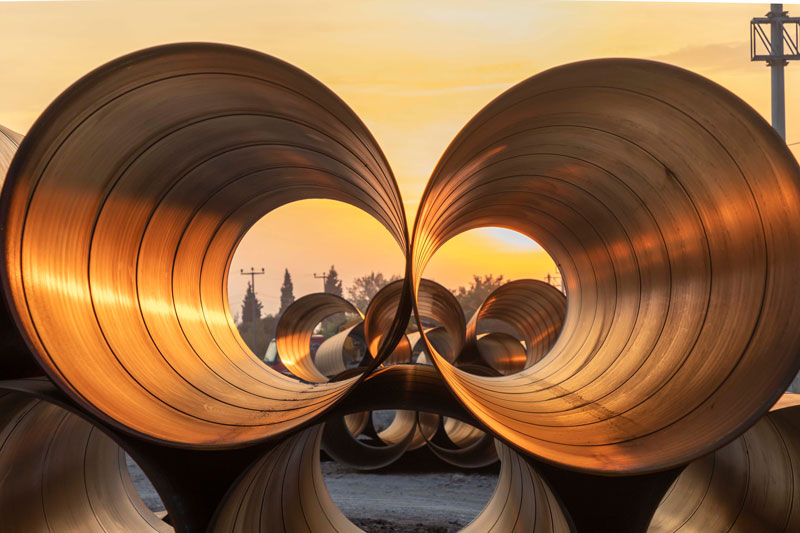
Following the preparation of the steel sheets, they are wrapped around a set of rollers and molds. These rollers and molds shape the spiral pipes. Under pressure, the steel sheets are curved into a cylindrical shape, as required for pipe production.

Welding
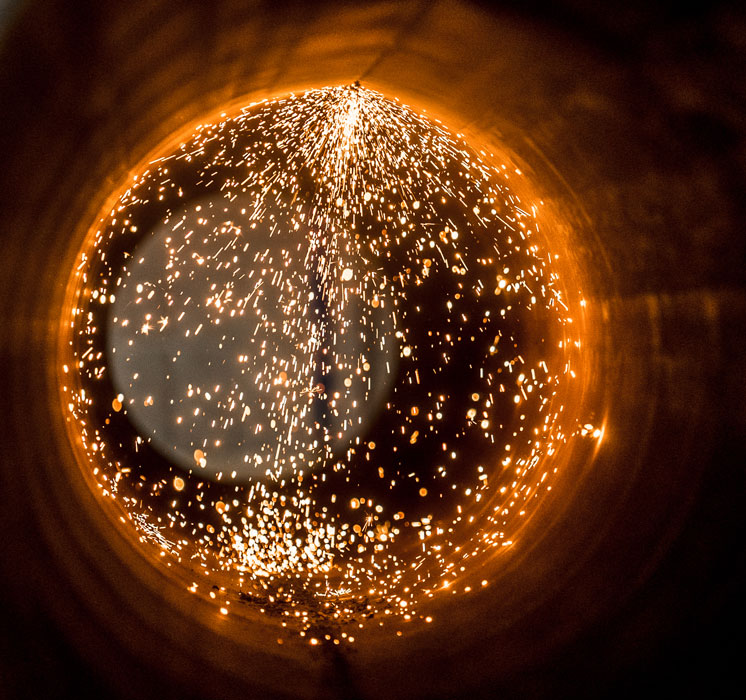
Next, the formed steel sheets are welded together through a process. These welds can be continuous or intermittent. Welding creates strong and durable seams between the different parts of the pipe, preventing them from separating.

Quality Testing
he pipes undergo rigorous inspection to ensure the quality of the welds. This includes tests such as hydrostatic testing, leak testing, and ultrasonic testing. These tests are conducted meticulously to guarantee that the pipes can confidently be used in pipelines.