


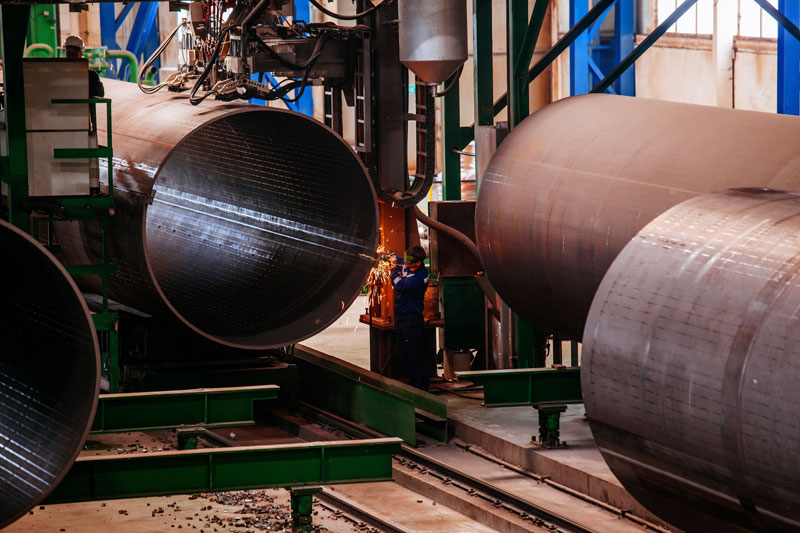
Generally, standards for steel pipe production are determined based on the diverse needs of industries and applications. These standards include requirements for raw materials, production methods, quality control, various tests, and the physical and mechanical properties of the pipes. Further details about these standards are provided below:
AWWA C200: The AWWA C200 standard, established by the American Water Works Association (AWWA), is specifically designed for steel pipes with a longitudinal welded seam used for irrigation and water supply systems in various applications. This standard outlines requirements and technical specifications for the production, testing, and quality of these pipes.
ASTM A53: Commonly used for steel pipes with a longitudinal welded seam, the ASTM A53 standard is suitable for general-purpose applications. This standard includes requirements for raw materials, manufacturing processes, quality tests, mechanical and chemical properties, and necessary measurements.
API 5L: This standard is specifically tailored for steel pipes with a longitudinal welded seam used in the transportation of oil and gas. API 5L encompasses various grades of pipes based on their type and class for use in different conditions.
ASTM A252: This standard pertains to spiral welded steel pipes used for specific applications such as providing embankment and supporting underground structures. The requirements of this standard include the pipes’ mechanical and chemical properties, and the manufacturing process.
ISO 3183: This standard is applicable to steel pipes with a longitudinal welded seam for the transportation of oil and gas. It includes requirements for mechanical and chemical properties, testing, and quality inspections.
BS EN 10224: This standard also pertains to steel pipes with a longitudinal welded seam used for the transportation of drinking water and wastewater. It outlines requirements for the production and delivery of these pipes.